
Fields Inside Amite County Property Tax Records
One Amite County office handles both assessment and collection. The appraisal side identifies and values each parcel. The collection side then applies millage, credits payments, and tracks delinquency, so read every field by its purpose.
| Field | What It Shows | Where |
|---|---|---|
| True value | Appraisal estimate before the statutory ratio | Tax Assessor roll |
| Assessed value | Tax base after the property-class ratio | Tax Assessor roll |
| Parcel identity | OWNER, PPIN, PARID, address, deed book/page and legal clue | TSC appraisal search |
| Exemption | Homestead treatment that can change the taxable result | Tax Assessor/Collector |
| Payment status | Whether land tax remains due or delinquent | Tax Collector |
Mississippi generally assesses owner-occupied residential property at 10 percent of true value. Other real property gets 15 percent. Millage follows assessment, and neither number predicts a sale price; the property value guide unpacks these distinctions.
Search Amite County Tax Records With Four Parcel Keys
The free Amite TSC appraisal search offers four keys: PPIN, PARID, owner, and address. An address is the easiest entry point. Parcel identifiers are steadier when a rural road label, mailing address, and situs disagree. Owner searches work best with the recorded legal name. Use the name of a person, trust, estate, or company.
| Field | Use it when | Result clue |
|---|---|---|
| PPIN | An older tax or appraisal record gives the number | Direct property key |
| PARID | The map or appraisal row supplies the parcel ID | Cross-system identifier |
| Owner | The recorded taxpayer name is known | OWNER result |
| Address | The situs or road address is known | ADDRESS result |
Result columns include PPIN, PARID, OWNER, ADDRESS, DEED BK, DEED PG, and LEGAL 1. The deed columns cite the instrument. The county lists no coverage year. Note: Copy the PPIN and PARID exactly before calling the office, since they cut ambiguity between similar owner names and road descriptions.
The January 1 Amite County Tax Roll Can Lag a Sale
Amite County builds its tax roll around a single date each year. The assessor values parcels based on who held title on January 1. Buy a house in April and record the deed that week, and the county tax records can still list the seller as owner of record until the next roll catches up. The mismatch is normal, not a sign of a filing problem. Amite County publishes no fixed turnaround for that ownership update, so treat any specific day count you hear as a guess rather than a rule.
Recent transfer. Treat the annual owner field as a tax clue and compare its deed book/page reference with the latest instrument at the Chancery Clerk.
The roll still answers class, valuation, and exemption questions. Title confirmation is different. The land index sits at the clerk's counter for public inspection, and the county offers no online deed portal.
Amite County True Value, Ratios, and Millage
The Mississippi Department of Revenue lays out the sequence. First estimate true value. Then apply the statutory class ratio. Millage then applies to the assessed value, which makes a displayed assessed figure a tax input rather than a market appraisal, and real property must be reappraised at least once every four years while Amite's roll is prepared annually.
| Mississippi class | Property category | Assessment ratio |
|---|---|---|
| Class I | Single-family, owner-occupied residential real property | 10% of true value |
| Class II | Other real property, except Class IV utility property | 15% of true value |
| Class III | Personal property except motor vehicles and Class IV property | 15% of true value |
| Class IV | Public-utility property | 30% of true value |
| Class V | Motor vehicles | 30% of true value |
A Class I house starts at 10 percent of true value. A non-owner-occupied tract generally starts at the 15 percent Class II ratio. Classification matters first. Comparing two accounts before settling class invites error. Apply the locally adopted millage only after identifying the assessed value. A sale price, an asking price, and the assessor's true-value estimate answer different questions. They should not stand in for one another.
- True value
- The appraisal basis before classification.
- Assessed value
- The class-adjusted amount used for tax.
- Millage
- The rate applied to the assessed amount.
- Tax lien
- A claim arising from unpaid tax under the collection process.
Report physical improvements to the assessor. A change to a building, use, class, or exemption can move the taxable result even with no sale.
Amite County Homestead Applications Run January 1 to April 1
The state homestead guidance sets the county filing window from January 1 through April 1. Eligibility turns on ownership and occupancy. File inside the window. The Amite County Tax Assessor/Collector may need parcel, ownership, and residence material beyond the brief online result.
Regular homestead relief is a credit of up to $300 on a qualifying home, per the county's summary, once true assessed value reaches $75,000. Special treatment is different. It covers a resident who was at least 65 before January 1 or is 100 percent disabled. Relief can then apply up to $75,000 of assessed value with the required proof. The assessor decides each case against current facts and documentation.
An exemption lowers the taxable result without touching the parcel's true-value estimate. Two bills can differ for that reason alone. Check the exemption entry when years differ. The office sits at 243 West Main Street, Liberty. Questions go by phone to 601-657-8973, by mail to P.O. Box 356, or by email to dmoore@amitecountyms.gov.
Annual reapplication is not ordinarily required. Ownership, marriage, death, divorce, and property changes each require a new filing. Separate a valuation change from a lost exemption. Bring the parcel key and ask which component moved, rather than inferring the reason from the final bill.
Trace an Amite County Tax Bill From Parcel to Status
The public appraisal row identifies the account. The combined office supplies the current collection answer. Amite County states that land taxes are due February 1, so timing matters. For a balance, receipt, or delinquency status affecting a purchase or redemption, ask the collector directly.
- Search TSC by address, owner, PPIN, or PARID and match the legal clue.
- Save the parcel keys, assessed value, owner, and deed book/page.
- Ask the collector for the current bill, payments, and exemption status.
- If delinquency is possible, ask whether a sale or redemption record exists.
The assessor and the collector share one Amite County office, but their record duties differ. The assessor locates, classifies, and values taxable property. That office also maintains ownership maps and related records, then updates the roll for the Board of Supervisors ahead of its July meeting. The collector receives the ad valorem taxes instead. So name the record you need. Is it the appraisal card, the adopted roll, the bill, a payment receipt, or the delinquency history? A parcel's appraisal result alone never proves the current tax was paid.
Visit at 243 West Main Street in Liberty. Hours run Monday through Friday, 8:00 a.m. to 5:00 p.m. Mail a request to P.O. Box 356, Liberty, MS 39645, call 601-657-8973, or fax 601-657-1083. Supply the PPIN, PARID, tax year, and document type. Staff then face a narrower question than an address alone allows.
- Assessed value
- The taxable base after classification.
- Mill rate or levy
- The rate used to calculate tax.
- Homestead exemption
- Qualified owner-occupant relief.
- Tax lien
- The public claim for unpaid property tax.
Amite County's April Land Sale Has a Two-Year Redemption Trail
Amite County offers delinquent land on the first Monday of April. Real estate then carries a two-year redemption period. A downloadable pre-sale list is not proof that any parcel actually sold. Payments, removals, and redemptions change status along the way. So the Tax Collector remains the decisive contact for current facts.
When no bid arrives, the county says a parcel may be struck off to the State. Delinquent years, penalties, and interest run through the Chancery Clerk before current taxes can be paid. Amite County does not accept delinquent taxes in installments. A purchaser at sale gains an interest, not a mature tax deed. During the two-year window, the owner can still redeem. Confirm the sale date, every redemption entry, the party struck, and any later tax deed in the land records.
Mobile homes follow a different calendar in Amite County. The county reports an October sale for them. Mississippi provides no matching redemption period for mobile homes, the state says. So a search result for a mobile home differs from one for the land beneath it. Ask the collector to name the property type and the governing sale record. Do this before trusting any deadline.
The Mississippi Tax-Forfeited Inventory sits apart from Amite's current bill. Its fields cover county, address, subdivision, parcel number, PPIN, market-value range, assessed owner, legal description, section, township, and range. Registration is required to save or apply for property. Results display ten at a time. A subscription file index lists Amite 2025 and 2023/2024 pre-sale files at $64.20 for one county. Sold-for amounts do not appear there. The vendor's subscription tax-sale file list visibly includes the Amite offerings. This helps in seeing which paid files exist.
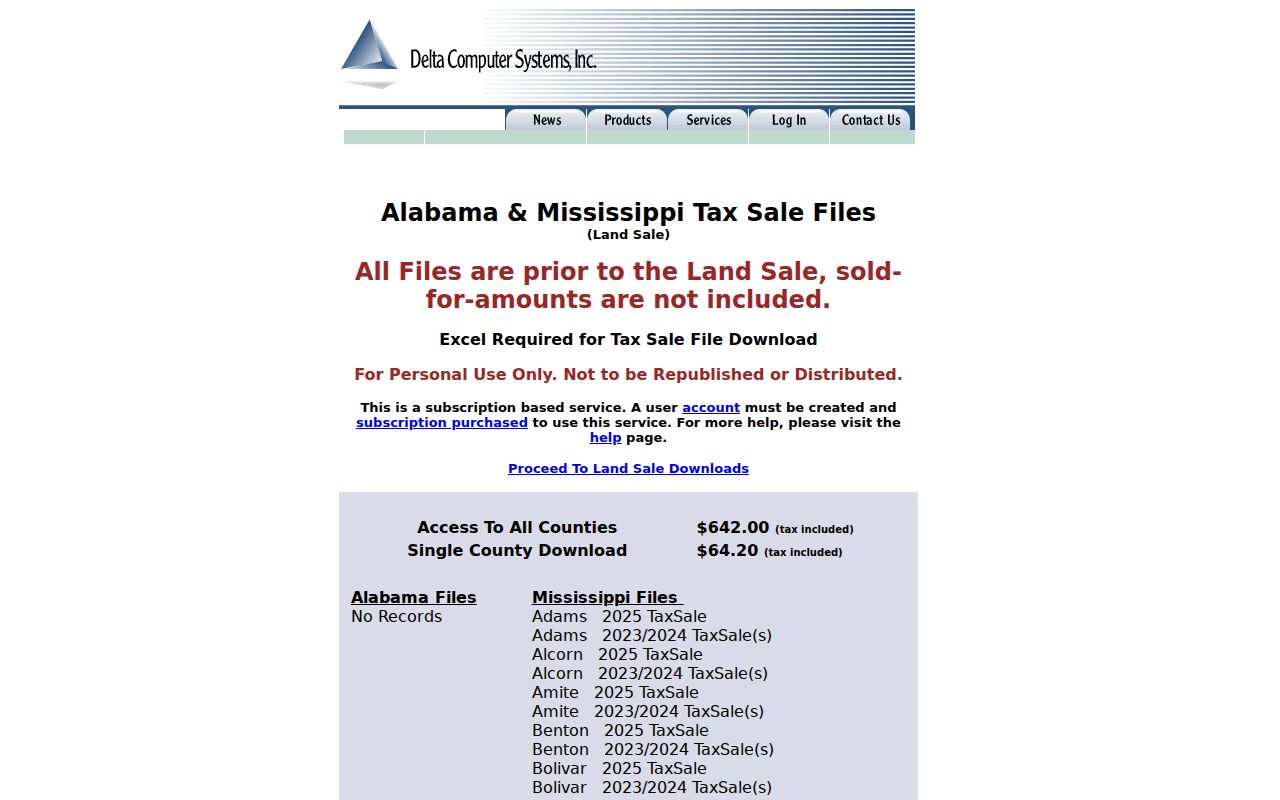
Treat the parcel clue as a starting point. Ask the Tax Collector and Chancery Clerk for the official status instead of accepting a downloadable pre-sale row as the final record.
Amite Land-Tax Records Begin as Early as 1818
Amite County tax history runs deep. The MDAH Amite tax series holds land and personal-property entries from many nineteenth-century years, with material beginning in 1818. It places surnames and tracts in early tax context.
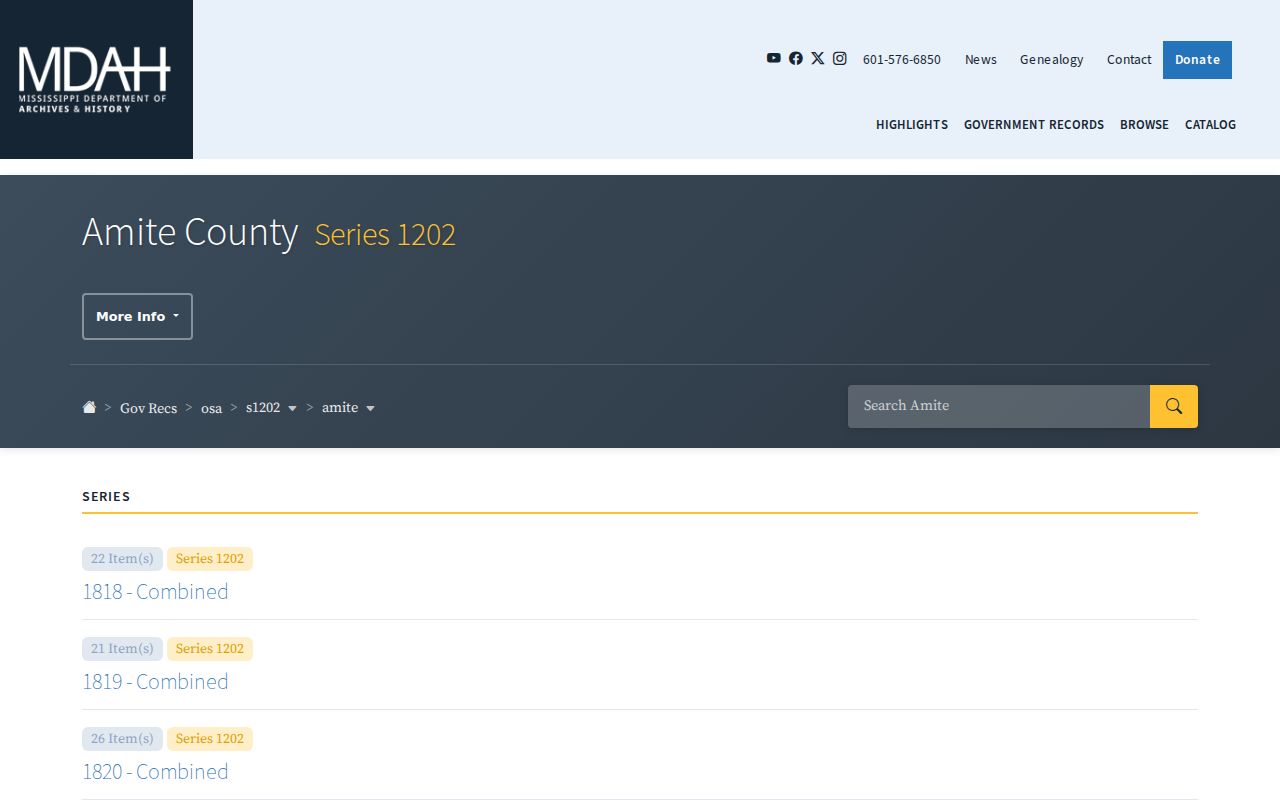
A historic tax appearance is not a complete title chain. Pair it with dated deed books, plats, and estate records before drawing conclusions.
The archive series covers land, personal-property, and change categories through nineteenth-century runs that end in 1891, with gaps along the way. MDAH's broader Amite County finding aid spans 1775-1992, and original boxes may require a reading-room request while courthouse microfilm sits ready for self-service use. Note the year, series, volume, and image or box reference for each item you pull. A surname that repeats across the tax roll hints at tax responsibility in a given year, but only the matching deed, probate order, or other recorded conveyance shows how the interest actually passed.
Contest an Amite County Assessment by the August Deadline
Begin with the assessor. Identify the parcel, its class, true value, assessed value, and the claimed factual error. Mississippi guidance sends county-roll objections to the board of supervisors. That deadline is the first Monday in August. Bring parcel identifiers, measurements, photographs, condition evidence, and relevant comparisons to focus the review.
Appeal window. File with the Amite County Board of Supervisors by the first Monday in August and confirm the current procedure before that date.
The state appeal guide explains later Review Board and Board of Tax Appeals stages. Official Notice of Appeal or Objection and power-of-attorney forms are on the Board of Tax Appeals site. A value objection is distinct from a deed or boundary dispute.
The Board of Tax Appeals forms page is the official source for the forms used at that separate state stage.
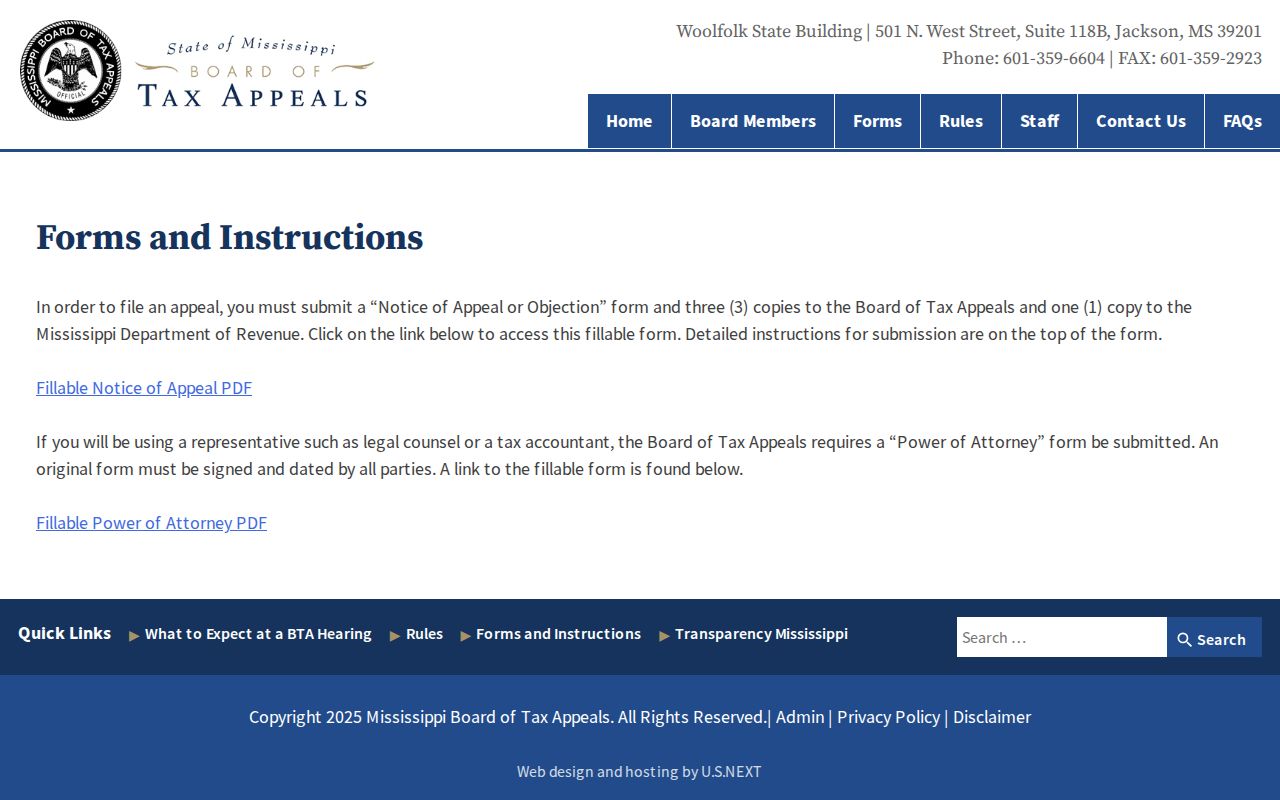
State guidance allows 20 days from the assessment for an ad valorem appeal to the Board of Tax Appeals, with the original plus three copies required. Verify the deadline on the actual notice. Confirm the correct forum too.